Modern Approaches to Legal Emergency Readiness
When a crisis hits, law firms must act with precision and compassion. The speed of legal intake now defines the credibility of a firm. In urgent moments, clients are searching for reassurance before strategy. They want to be heard and guided with clarity. Modern technology allows this to happen faster than ever before, turning intake into a real-time operation rather than a slow administrative step.
The concept of legal intake has evolved. It no longer focuses only on gathering data but on understanding the urgency of context. Emergencies require decision-making supported by verified information. This means that intake must be digital, adaptive, and guided by intelligent systems. With properly designed interfaces, clients can submit documents, provide statements, and request updates within seconds. These systems automatically tag issues, identify high-risk cases, and alert the right professionals.
The transformation of intake reflects a wider change across the legal world. Firms are replacing manual systems with integrated digital platforms that combine speed with accountability. What once took days now happens in moments. Artificial intelligence supports this shift, analyzing tone, urgency, and data accuracy. PNCAi contributes to this evolution by introducing systems that align technology with human empathy, bridging the gap between automation and compassion.
Clients in crisis find calm through structure. A smooth intake experience assures them that their issue is prioritized. For legal teams, it delivers clarity and action plans that begin immediately. The modern intake process transforms uncertainty into coordination, marking the new era of legal emergency readiness.
Structured Client Experience Through Enhanced Legal Systems
A crisis magnifies every flaw in communication. When clients reach out under stress, even a small delay feels overwhelming. This is why enhanced legal frameworks have become essential for law firms focused on reliability. Systems built on digital infrastructure are not just faster, they are smarter. They recognize urgency, direct resources, and measure outcomes with consistency.
Modern legal operations begin with structured data. When an inquiry arrives, the system identifies the type of case and routes it to the appropriate specialist. Artificial intelligence supports this sorting by analyzing key terms and urgency indicators within the message. This ensures that time-sensitive cases reach the right people instantly. It is not just about speed but precision, responding correctly the first time.
These systems also introduce transparency. Clients can log into secure portals to track progress and upload documents. Every interaction is logged and time-stamped, creating a full record that benefits both client and firm. Notifications keep clients updated without needing repeated follow-ups. The automation behind this process protects accuracy, ensuring every commitment is documented.
Legal frameworks powered by intelligent technology also improve coordination between departments. Attorneys, paralegals, and administrative staff share synchronized dashboards that update in real time. When one task is completed, the next team member receives an automatic alert. This eliminates confusion and saves valuable minutes.

Emergency response in the legal world depends on dependable systems, and dependable systems depend on continuous improvement. Firms that refine their services with feedback loops gain operational insight. Reports show where delays occurred and which communication methods worked best. Each cycle makes the response sharper and more client-focused.
Ultimately, these integrated legal systems allow firms to perform under pressure. Clients in crisis experience steady communication and confident leadership. Law firms, in return, build a reputation for reliability that lasts beyond the emergency.
Strengthened Capabilities Through Legal Development
Behind every efficient system is a trained professional who knows how to use it effectively. Technology brings power, but training turns that power into performance. Legal firms that prioritize education gain flexibility during unpredictable events. They understand that the ability to think clearly under pressure depends on preparation, not improvisation.
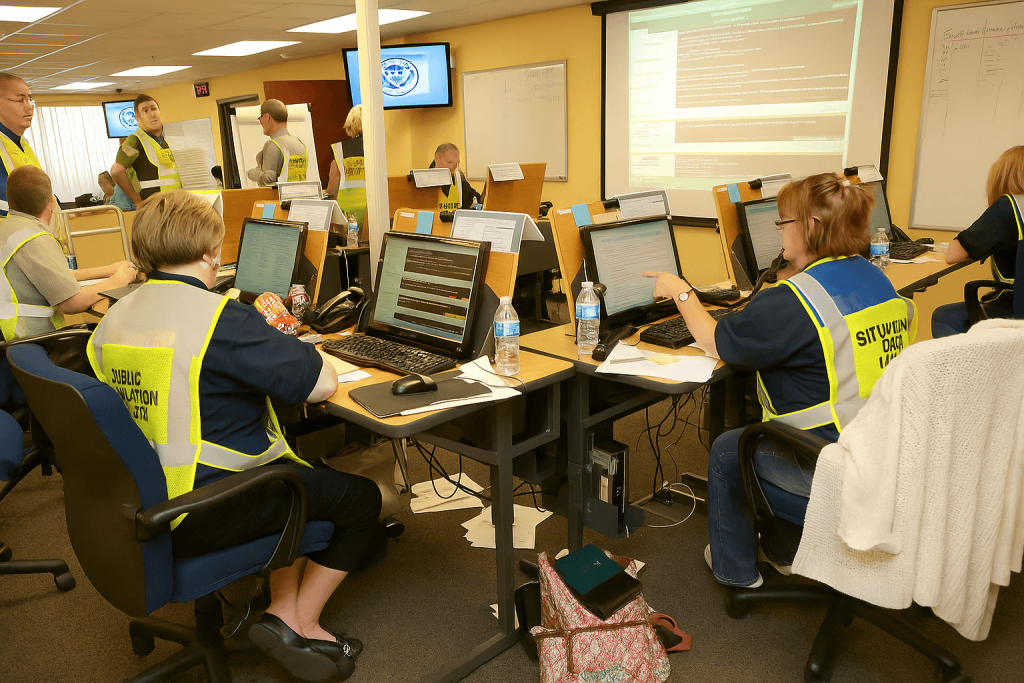
Structured programs for legal intake specialists focus on real-time decision-making. Employees learn how to evaluate urgency, interpret system cues, and maintain composure with emotional clients. These lessons turn theoretical procedures into instinctive action. During an emergency, staff already know their roles, the tools they need, and the steps to execute.
Comprehensive learning also includes technology literacy. Staff members must feel confident navigating automated platforms, interpreting analytics, and verifying information. When they understand both the technical and emotional aspects of intake, they perform with consistency. Each intake professional becomes a stabilizing force for the firm and the client.
Simulation-based workshops are among the most effective approaches. Teams experience mock emergency intakes, allowing them to test their communication and timing. Feedback sessions follow, identifying strengths and improving weak points. This cycle of learning produces legal professionals who are prepared for pressure rather than paralyzed by it.
Cross-functional learning adds another layer of resilience. Intake staff, attorneys, and communication officers practice together, ensuring unified coordination. They learn to transfer cases seamlessly across departments while maintaining client tone and context. During real emergencies, this coordination prevents delays and miscommunication.
Continuous education also reduces burnout. Employees equipped with skill and structure handle stress more effectively. They trust their tools and processes, which creates calmer interactions with clients. Firms that invest in professional development are not just improving performance, they are building culture. Every crisis becomes a test that the team is ready to pass together.
Unified Response Through Technology and Human Insight
The essence of emergency readiness lies in balance. Technology provides scale and precision, while humans bring interpretation and care. A system without empathy feels robotic; a team without automation feels overwhelmed. The balance between the two creates resilience.
Unified systems now allow intake specialists to see the entire scope of a client’s case within one screen. Integrated software connects phone calls, emails, and online forms. Every document is accessible, every update recorded, and every deadline monitored. This visibility reduces mistakes and improves accountability. When clients call for updates, the team answers with accuracy rather than assumption.
Automation also supports compliance. It reminds staff of deadlines, privacy requirements, and case milestones. This prevents legal risk while maintaining client trust. When emergencies arise, compliance cannot be compromised, and automation ensures that every step follows proper order.
Human professionals, on the other hand, interpret emotion. They identify when a caller’s tone signals distress or confusion and respond with reassurance. Intelligent tools like PNCAi amplify this by providing context, flagging keywords that suggest urgency or identifying repeat callers who may need special attention. The system guides the human response, but the human voice delivers the resolution.
When both elements operate in harmony, a legal firm becomes stronger than the sum of its parts. Data moves faster, people respond smarter, and clients feel supported. This unity of human and digital design is redefining legal operations around the world.
Continuous Improvement in Crisis Legal Management
Improvement is not a phase, it is a cycle. Each emergency teaches a firm something new about readiness, communication, and empathy. Firms that analyze performance data after every event refine their systems for the next challenge. Reports measure response time, intake accuracy, and client satisfaction, revealing exactly where progress can occur.
Digital systems help manage this growth. Analytics dashboards visualize how well each department handled its workload. They identify patterns such as delayed responses or frequent client concerns. Over time, this data becomes strategic knowledge. It allows leadership to adjust resources, expand capacity, and enhance the training curriculum.

Another benefit of continuous improvement is innovation. Firms that track performance data often uncover new ways to streamline processes. They may discover automation opportunities that reduce repetitive tasks or communication gaps that can be closed with integrated messaging. Every insight becomes an upgrade that strengthens the next emergency response.
As the firm’s digital ecosystem matures, it develops resilience. Even during unexpected crises, cyberattacks, public disputes, or data breaches, its processes remain stable. Continuous monitoring ensures that systems remain secure and compliant. Clients notice this reliability and associate it with professionalism.
PNCAi embodies this principle by merging advanced technology with self-learning frameworks. Each update reflects insight gained from thousands of client interactions. The goal is not only to react but to foresee challenges before they arise, setting a new benchmark for the legal industry’s preparedness.
Building Trust Through Intelligent Legal Connection
At the core of every legal emergency lies human fear and the need for assurance. Technology may provide speed, but empathy provides comfort. The combination of both transforms how law firms interact with clients during high-pressure situations.
Firms that adopt modern intake systems supported by intelligent software strengthen their emotional and operational reliability. They respond faster, communicate clearly, and maintain accuracy without losing compassion. Clients who experience this efficiency remember the calm professionalism that guided them through uncertainty.
PNCAi represents this intersection of innovation and humanity. Its platforms enhance every layer of legal intake, from first contact to resolution. By uniting automation with understanding, PNCAi helps firms evolve into crisis-ready networks built on trust and intelligence.
If your organization is ready to redefine how it responds to urgent legal needs, now is the moment to build smarter systems and stronger connections. Empower your team with the tools and insight to deliver rapid, compassionate responses at scale. Begin shaping a legal future where preparedness is not just a strategy, it is your competitive strength.